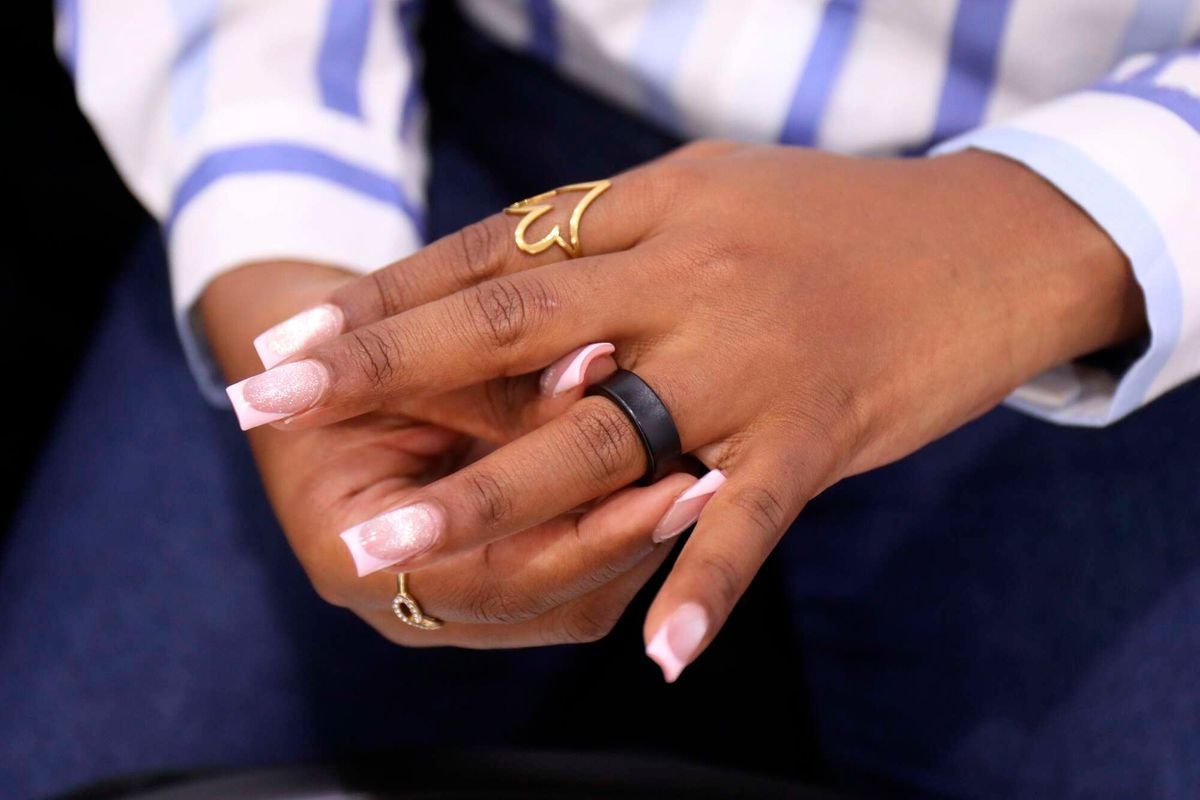
A new category of wearable technology is quietly finding its way onto the fingers of Kenya’s fitness enthusiasts, offering an alternative to the familiar smartwatch and fitness tracker wristband.
The smart ring, a compact device that resembles ordinary jewellery, tracks sleep patterns, heart rate, activity levels and other health indicators without the bulk of a watch or the need to keep checking a screen.
But while the gadgets are attracting interest among health-conscious consumers and tech enthusiasts, uptake in Kenya remains slow, with some high-end models retailing for more than Sh45,000.
At Nairobi, gadget shops, vendors say customers who have researched the technology seek the rings for a discreet way to monitor their health around the clock.
Unlike smartwatches, which display notifications and other information on small screens, smart rings largely operate in the background, collecting data and sending it to a smartphone app for analysis.
Their appeal lies partly in their size and ability to remain on the finger through the day and night, including when users are asleep. This is in contrast to watches, which owners frequently take off to charge overnight.
“It is mostly fitness enthusiasts who are going for rings; they will come directly to the shop or call asking specifically for whatever model they want because they already know what they are looking for,” Cate Manyuira, the head of marketing at Phone Place Kenya, tells the BDLife . “They come to us after they have done their own research.”
The Nairobi city centre-based gadget store has sold smart rings since 2024. But Ms Manyuira says the rings don’t sell as fast as smartwatches or fitness bands.
“You can find a month you haven’t sold a single smart ring, compared to the watches and fitness bands which move daily. It is at most two rings in a month,” she says.
The slow sales reflect a market in which smartwatches and fitness bands remain the more familiar options, despite the growing range of devices designed to help consumers track their health.
Catherine Manyuira, marketing manager at Phone Place Kenya, displays a smart ring alongside a sizing kit at Bazaar Plaza in Nairobi on October 22, 2026.
Photo credit: Bonface Bogita | Nation Media Group
David, a sales manager at another gadget shop in Nairobi’s Westlands who asked to be identified only by his first name because he is not authorised to speak for the business, notes a growing interest among male and female fitness enthusiasts aged between 30 and 45 years.
The younger market, he adds, often relies on smartphone applications to monitor activity and sees a ring as an additional expense. Older buyers who are more interested in tracking their health performance are more likely to pay for the extra data.
Smart rings use a combination of miniature sensors to collect physiological and movement data from the wearer’s finger.
Optical sensors shine light into the skin using light-emitting diodes or LEDs, while photodetectors measure changes in the reflected light as blood moves through vessels.
These changes help the device estimate heart rate and heart-rate variability (HRV), a measure of variations in the time between heartbeats. Depending on the model, it may also estimate blood oxygen levels.
An accelerometer detects movement, helping the ring distinguish between periods of activity and rest, while temperature sensors track changes in skin temperature. Bluetooth transmits the collected data to a smartphone, where the manufacturer’s software processes it into charts, scores and personalised insights.
The finger offers a useful location for optical sensing because of its blood supply and the proximity of blood vessels to the skin. However, the quality of readings still depends on factors such as fit, movement, circulation and the technology used by each manufacturer.
Dr Zeeshan Chaudhry, head of accident and emergency at M.P. Shah Hospital in Nairobi, says smart rings’ advantage over watches is their design and their ability to collect continuous data comfortably, particularly during sleep.
“Their greatest value is often not a single reading, but identifying trends and changes from an individual’s normal baseline over time,” he tells BDLife .
Some advanced rings also incorporate near-field communication (NFC), which can support functions such as contactless payments or access control where compatible systems are available.
Early smart rings in the 2010s focused largely on interacting with NFC-enabled devices. The Finnish company Oura helped shift the category toward health and sleep tracking with its first-generation ring in 2015, paving the way for other manufacturers to enter the market.
Today, other brands available to Kenyan consumers include South Korean giant Samsung, India-based Ultrahuman and UAE-based Porodo.
Budget models can retail for as little as Sh3,500, offering basic functions such as heart-rate monitoring, blood oxygen estimates and sleep analysis.
Porodo’s offerings start at about Sh5,000, while premium models from Samsung, Oura and Ultrahuman can cost upwards of Sh45,000, depending on the model and retailer.
The more expensive devices from Samsung, Oura and Ultrahuman typically offer longer battery life, additional tracking functions and more detailed analysis through their accompanying applications.
According to product details published online by the manufacturers, many rings can last between six and nine days on a charge, although actual battery life varies by model and usage.
They can track activity, sleep, skin-temperature trends and stress-related indicators, with some offering features for menstrual-cycle tracking and estimates of fertile windows.
The tech companies say these features are intended to help users understand patterns in their bodies over time rather than provide medical diagnoses.
As manufacturers also add artificial intelligence (AI)-powered analysis to their applications, the rings are evolving from passive trackers into systems that interpret data and suggest behavioural changes.
For instance, rather than simply reporting how long a person slept, an application may compare sleep duration, heart rate and activity with previous readings and suggest adjusting bedtime, easing off exercise after a poor night’s sleep or taking a recovery day.
Ultrahuman’s mobile app offers detailed behavioural insights, including guidance on caffeine timing to minimise sleep disruption. It can also flag a rise in skin temperature alongside a lower-than-usual HRV, which may indicate that the body is under strain or that an illness could be developing.
Such readings are not confirmation that a person is sick. Instead, the company says they offer a prompt to consider other symptoms and changes in wellbeing.
The software’s usefulness depends partly on how much information it has accumulated about an individual. Repeated measurements can help establish a personal baseline, allowing changes to be identified rather than relying solely on generic targets.
Catherine Manyuira, marketing manager at Phone Place Kenya, displays different sizes of the Samsung Galaxy Ring in a sizing kit at Bazaar Plaza in Nairobi on October 22, 2026.
Photo credit: Bonface Bogita | Nation Media Group
This is one reason the devices are attractive to fitness enthusiasts who want to track recovery and sleep as closely as their exercise routines. This is in addition to the ring’s appearance.
“There is the aesthetic clean vibe that you said there’s that clean polished look,” Ms Manyuira says.
“The bulkiness of smartwatches provides another selling point for the ring. They find it an aesthetic, practical, cooler way of tracking their health.”
She estimates that their buyers are mostly aged 30 and above, while a few younger purchasers are often technology enthusiasts keen to complete an ecosystem of devices from one manufacturer, such as Samsung.
David sees a similar opportunity, arguing that the ability to wear a ring continuously, without regularly removing it to charge, could help it appeal to consumers who want uninterrupted monitoring.
Still, the ring is not always the end of the expense. Some manufacturers charge recurring fees for access to their full suite of analysis and personalised insights.
Oura, for example, charges $5.99 (Sh777) monthly for its membership, which unlocks additional insights, historical data analysis and guidance based on the user’s measurements. Some basic tracking remains available without an active membership, but feedback and access to features are limited.
Samsung and Ultrahuman do not require subscriptions for their smart rings, although features differ across manufacturers.
Compatibility is another consideration for buyers. Samsung’s Galaxy Ring is designed for Android users, while competing models such as Oura and Ultrahuman also support Apple’s iOS devices.
The recurring charges and premium prices could slow adoption in a market where consumers already have access to activity tracking through smartphones and less expensive wristbands.
The technology also faces competition from smartwatches, which combine health monitoring with notifications, calls, payments and other functions. For consumers who want a single device for both fitness and everyday digital tasks, a watch may offer more value.
The US-based International Data Corporation estimates put smart ring shipments at about 4.3 million units in 2025, up 49 percent from the previous year, compared with an estimated six per cent increase in smartwatch shipments. The figures point to rapid growth from a much smaller base – IDC estimated that 163.5 million smartwatches were shipped during the year.
But even as smart rings’ growth rate suggests rising interest in smaller and more discreet health-monitoring devices, market analysts say they remain a niche product globally.
The measurements are also not foolproof. Health experts say movement, poor fit, temperature, circulation and differences in manufacturers’ algorithms can affect readings.
Dr Chaudhry says heart-rate measurements at rest may be reasonably accurate on many modern devices, but estimates of sleep stages, calories burned, stress and oxygen saturation can vary considerably between devices and individuals.
He cautions that consumers can become unnecessarily alarmed by an abnormal reading or falsely reassured by a normal one.
“These devices are not perfect medical instruments… I advise people to look at patterns rather than isolated numbers,” he says. “If a wearable repeatedly detects an abnormality, particularly when accompanied by symptoms, that should prompt proper medical assessment rather than self-diagnosis.”
Health scores can also give consumers a misleading sense of certainty about aspects of their health that the devices cannot directly measure.
A ring cannot independently measure blood glucose without an appropriate validated monitoring system, for instance.
“Wearable information should therefore be seen as additional health information rather than a diagnosis,” Dr Chaudhry says. He sees the devices as complementary to healthcare, not replacements for medical consultations, laboratory tests or other appropriate investigations.
Their potential advantage is that they can capture information over days or months, whereas a hospital visit provides a snapshot of a patient’s condition at a particular time.
That longer view may help people notice changes in sleep, activity or resting heart rate and discuss them with a healthcare professional.
Critics have also raised privacy concerns. Rings collect sensitive information about users’ bodies, sleep and daily routines, sparking questions about who can access the data, how long it is retained, whether it is shared with third parties and what happens if a manufacturer is acquired or suffers a security breach.
As manufacturers compete to make wearable technology smaller and more personalised, smart rings are offering fitness enthusiasts another way to monitor their bodies.
But their challenge in Kenya is to move beyond a small circle of fanatics and persuade a wider market that the convenience and insights are worth the cost.
The ring has yet to dislodge the smartwatch and fitness band as the country’s more familiar wearable companions.
“For them to go as mainstream as the watches in the Kenyan market, more publicity needs to be done, not only from the sellers, but also the manufacturers,” Ms Manyuira said.