


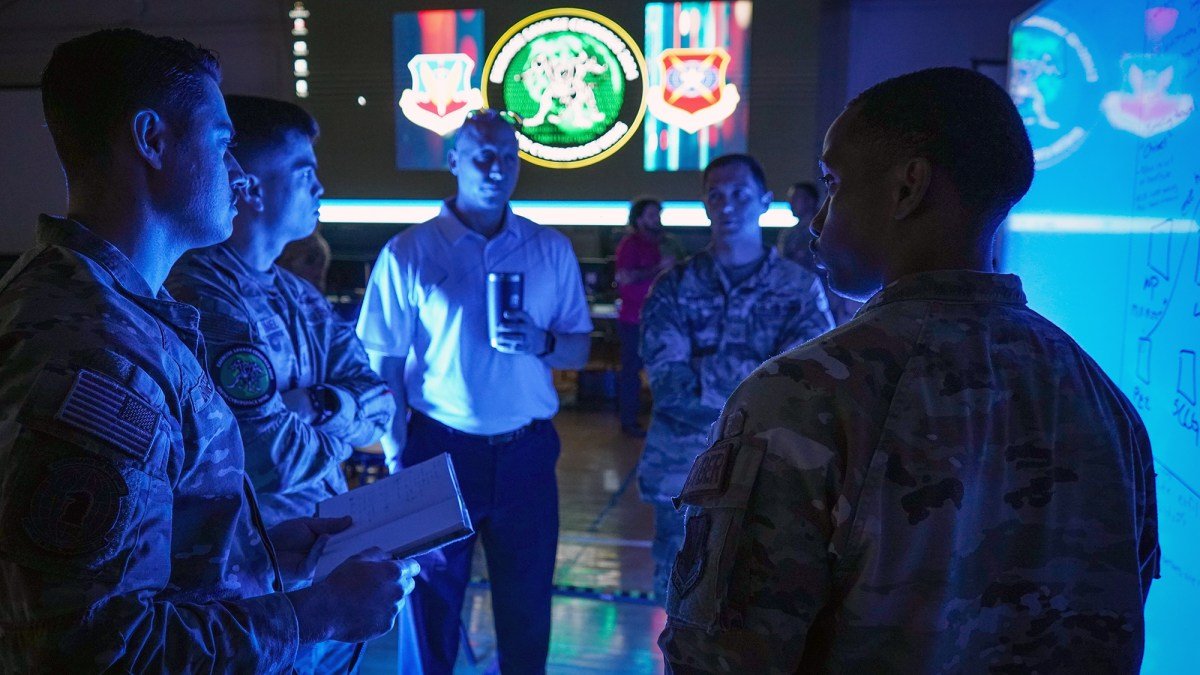
A new report argues that an independent Cyber Force should be staffed by only commissioned officers and warrant officers to better develop the highly technical skillsets that digital conflict demands.
Published Wednesday by the Center for Strategic and International Studies and the Foundation for Defense of Democracies, two Washington, D.C. think tanks, the report proposes a blueprint for standing up a Cyber Force, should Congress decide to do so.
Policymakers in the Pentagon and on Capitol Hill have debated for years whether the U.S. military needs an independent Cyber Force. Opponents say it would lead to unnecessary bureaucracy and confusion, but some current and former cyber troops say readiness suffers without a service that prioritizes recruiting, training, and equipping cyber troops above all others.
Why it would be different from the Space Force
Rather than re-litigate the case for a Cyber Force, the goal of the new report is to avoid what happened to the Space Force when it launched in 2019.
“They were told to break ground on construction without having hired an architect or sketched a blueprint,” Joshua Stiefel, a former House Armed Services Committee staffer who co-led the new report, told Task & Purpose in an interview.
Some of the report’s recommendations and highlights include:
- A new Cyber Force could either form its own military department or stand up as an independent service under the Department of the Army, similar to how the Space Force exists under the Department of the Air Force. The report said standing up a Cyber Force under the Army would be cheaper and faster than launching a new department;
- The force would need about 30,000 people (20,000 active-duty troops, 3,500-5,000 National Guardsmen, and 6,000 civilians and contractors);
- The Cyber Force’s first operating force could be ready within 12 to 15 months;
- No reserve Cyber Force, just a National Guard component that can answer to state and federal authorities;
- New hybrid units such as cyber combined arms squadrons, which bring the developers of cyber technology closer to the operators who use it;
- Heavy emphasis on promoting cyber troops based on contribution to the mission rather than on “generic administrative performance”;
- Flexible career paths so cyber troops can stay behind the keyboard, rather than have to shift to management or command roles;
- Industry exchange tours to expose cyber troops to private sector skills;
- A dedicated intelligence center and judge advocate generals to navigate the grey zone of digital conflict.
How it would happen and how much it would cost
The report’s authors estimated that it could cost between $10 and 11 billion to stand up the force; however, they argued that a lot of that already goes toward existing cyber abilities spread across the other services.
The Pentagon wants to spend around $7.7 billion for cyberspace operations in its fiscal year 2027 budget, the report said, and the military already spends about $2.8 billion on cyber personnel costs across the services.
“So this is really not new money we’re talking about. This is actually money that exists in the budget today. It’s just fragmented across four services,” Stiefel said. “By unifying that, by consolidating and in centralizing it, our proposition is you’re going to get a lot better return on your investment.”
Top Stories This Week
Not all cyber troops in the other services would make the jump to the new Cyber Force. Each service would remain in charge of building, maintaining and securing its own information technology systems, which together make up the Department of Defense Information Network.
Meanwhile, the Cyber Force would focus on offensive and defensive cyber operations, such as disabling enemy weapon systems and “hunting forward,” where allies invite U.S. cyber troops to hunt for adversaries inside their networks.
The report authors likened it to aviation: while each branch uses aircraft, only the Air Force has the know-how and tools to conduct a long-range strike like Operation Midnight Hammer.
But why officers?
The report said the technical nature of cyber warfare, and the fact that many enlisted cyber operators already act as both leaders and technical experts, justifies an officer-only Cyber Force. While the report did not specifically call for a Cyber Force to pull in enlisted cyber troops from the other services and then promote them to warrant officers or commission them as officers, it seemed to indicate that would be appropriate.
“Considering a legacy pay scale, the commissioners could not articulate valuable reasons to preserve enlisted rank structure when the same individuals could continue their service as warrant officers,” they wrote.
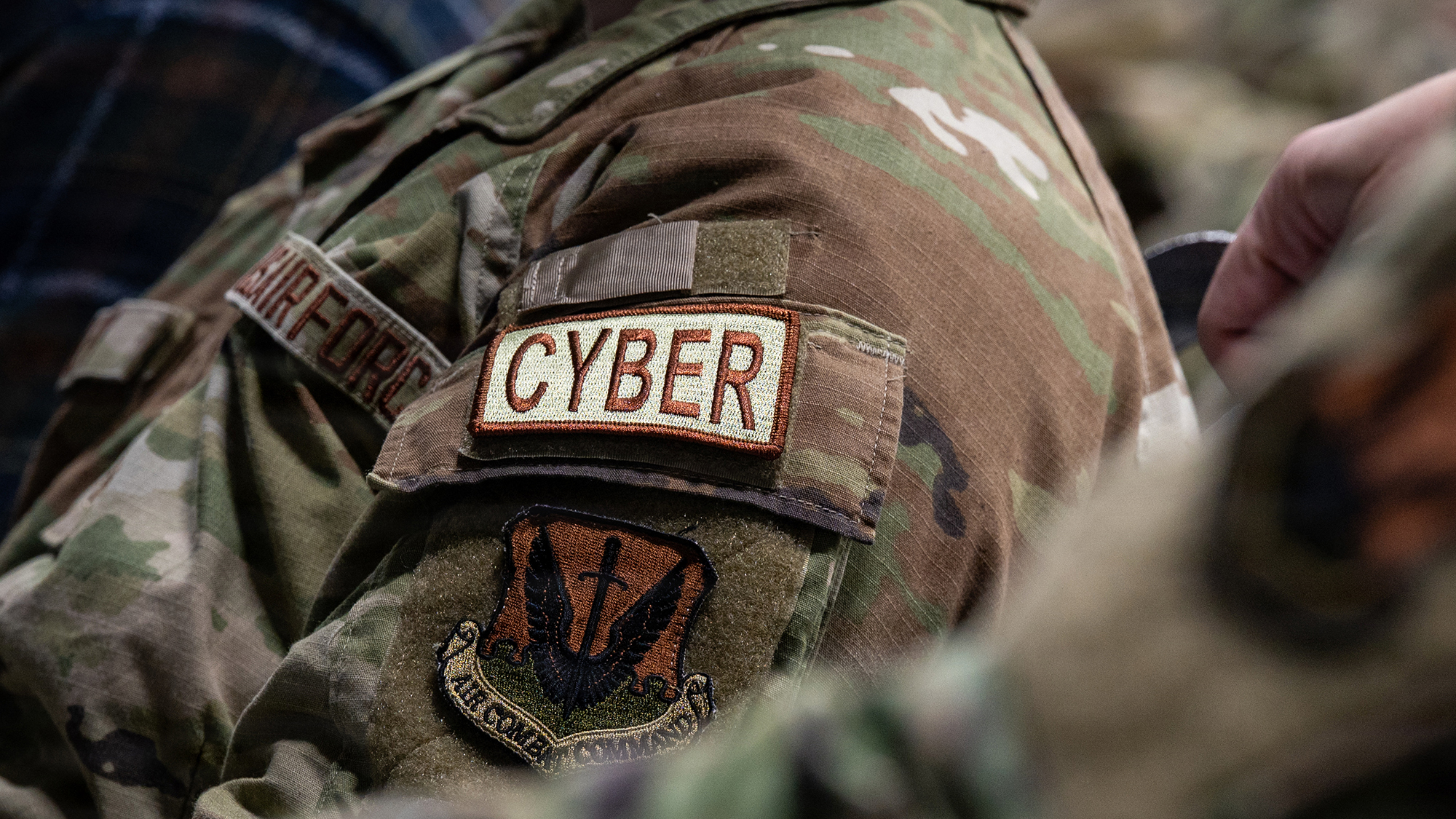
Cyber operators take about 10 years to become fully proficient — about the same time as a fighter pilot. Unlike those in the cyber field, military aviators are predominantly officers, though, as is the case with the Army, some helicopter pilots can be warrant officers.
“It’s not that we don’t value the enlisted cadre; in fact it’s the opposite,” Stiefel said on a media call. “We value the enlisted cadre so much that we believe if they can make it through the cyber pipeline, they have more than earned the credibility, the merit, to wear a warrant officer’s collar device.”
Next steps?
Currently, bipartisan and bicameral lawmakers on Capitol Hill support an independent Cyber Force, with Sen. Kirsten Gillibrand (D. N.Y.) proposing an amendment to start one in the 2027 defense funding bill. Whether that passes is unclear, but Stiefel thinks interest in a Cyber Force is growing.
“It feels like a conversation where the volume continues to rise,” he said.

Task & Purpose Video

