


With plans for city-owned grocery stores and a focus on affordability, the new mayoral administration offers fresh hopes of successfully confronting the food crisis among students.
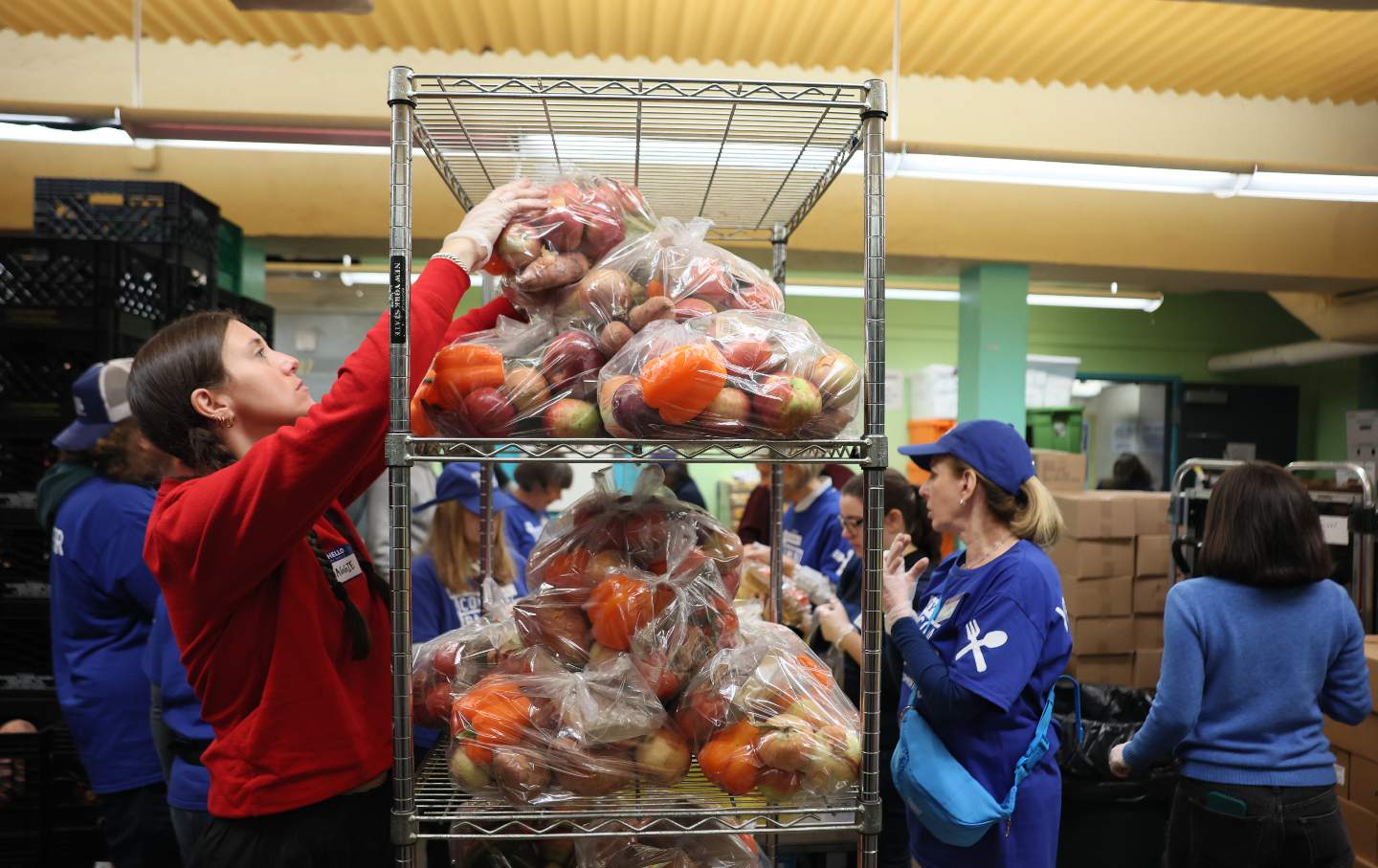
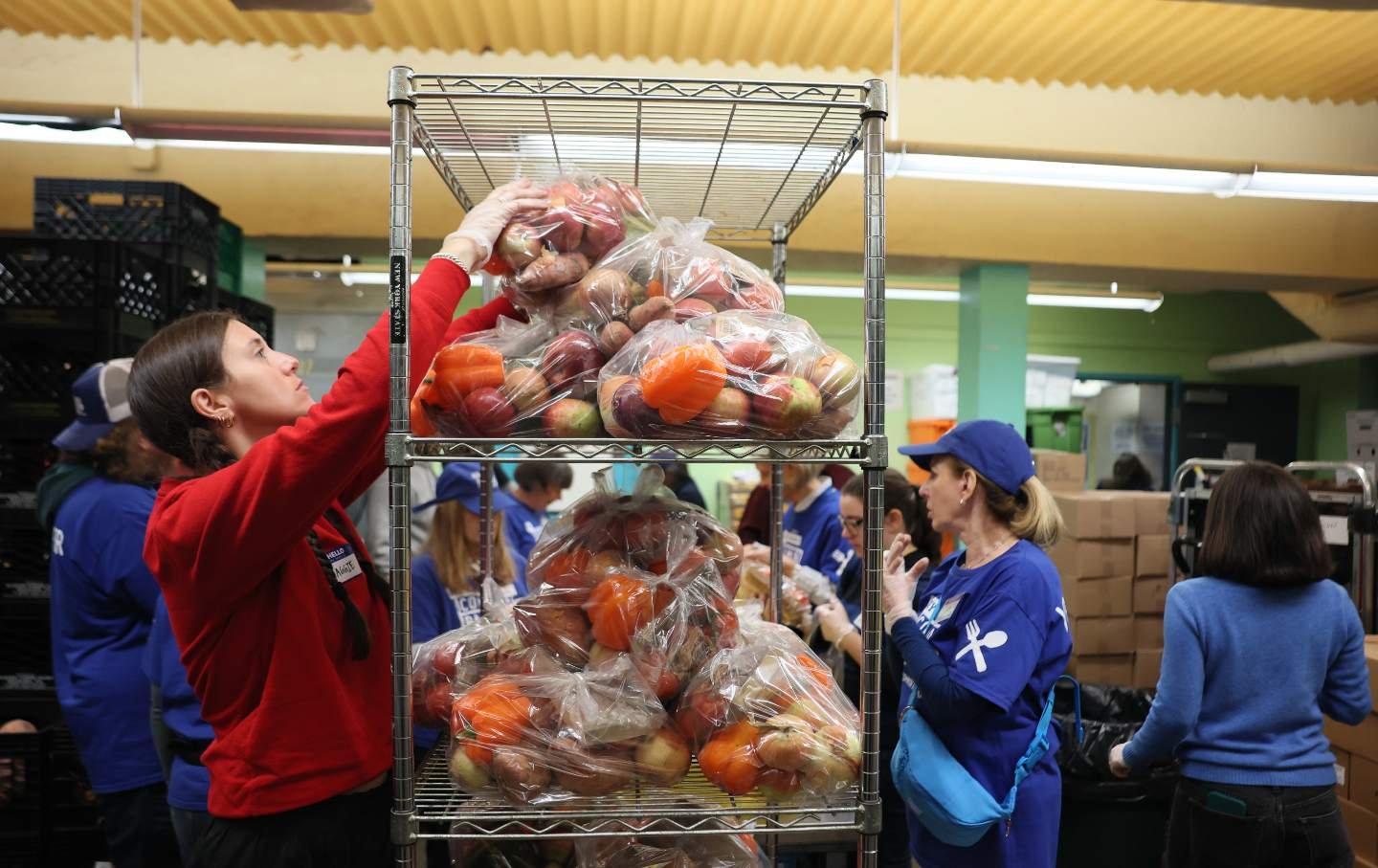
Volunteers with New York Common Pantry help to prepare food packages on October 30, 2025, in New York City.
(Michael M. Santiago / Getty)
When Steven Gray’s family first received their monthly EBT allowance, the trips to Costco were “life-saving.” Gray said that when he was growing up in South Brooklyn and struggling with food insecurity, running out of funds often meant scrambling to make money with their siblings to help their parents afford groceries. Later, as a financially independent undergraduate student, Gray applied for the Supplemental Nutrition Assistance Program themselves. After being accepted, they were finally able to fill their own refrigerator. “SNAP is not only just food being put on the table,” said Gray, now a student at Columbia Law School. “It’s stability for the future.”
At midnight on October 1, as President Donald Trump’s administration fought to withhold funding for the nation’s largest anti-hunger program, the chaos and uncertainty around the program led Gray, one of the more than 3 million college students eligible for SNAP, uncertain of their next meal. “We shouldn’t be waving around SNAP benefits and other social benefits as political bargaining chips,” said Gray.
The temporary pause on SNAP benefits during the government shutdown only exacerbated the larger food insecurity crisis among college students, especially in New York City. In 2019, nearly 50 percent of students in the City University of New York system were reportedly food insecure. Food costs have risen more than 30 percent over the last decade. and more than 40 percent of families cannot afford the average median price of weekly groceries. Without reliable access to food, students have lower GPAs, worse mental health, and are less likely to get their degree.
In 2025, campuses needed extensive planning to keep students fed. In preparation for the government shutdown, Dee Dee Mozeleski said her pantry on the City College of New York’s campus started bulking up on food in August. Mozeleski, a former SNAP beneficiary and the senior vice president of the university, oversees Benny’s Food Pantry, which distributed more than 30,000 pounds of food last year. Without extra preparation, she said, the pantry would not have had the capacity to service the 12,000 visits it has had since August.
The organization’s funding comes from City Council funds, private donations, and long-standing community partnerships. Many of the pantry’s volunteers live in NYCHA housing, according to Mozeleski. While student organizations and activists at City College have tried to increase food drives on campus, Mozeleski says it’s been difficult, as some of their partners are funded by the USDA, which saw mass layoffs during the government shutdown. “The first thing you see,” said Mozeleski, “is a heightened sense of fear on campus.”
The new city administration offers fresh hopes of successfully confronting the food crisis among students. Mayor Zohran Mamdani has previously said that “the job of city government is not to tinker around the edges while one in four children across our city go hungry,” and a meeting between Trump Mamdani in November saw surprisingly positive discussions around affordability and desire to lower grocery prices.
Current Issue

Mamdani is no stranger to the hunger students face. As a State Assembly member, he advocated for, and helped pass, legislation that increased funding for public school students to get free meals. He famously also went on a 15-day hunger strike for taxicab drivers. During his campaign, Mamdani proposed the establishment of city-run grocery stores in each borough that would buy and sell products at wholesale prices. The initiative would cost an estimated $60 million and is supported by two-thirds of New York voters, though it’s unclear if the City Council will approve the proposal.
“Publicly owned grocery stores already exist, serving over a million Americans every day, with prices 25 to 30 percent lower than conventional retail,” wrote Raj Patel and Errol Schweizer for Civil Eats. “If the private market cannot or will not deliver affordable, nutritious food to all its citizens—and it has proven that it won’t—then the public sector must.”
Dr. Celina Su, the author of Budget Justice: On Building Grassroots Politics and Solidarities and a member of Mamdani’s transition team, believes that a city-run grocery store is not as “far-fetched” as people believe, and that new ideas are also needed to serve New Yorkers and keep them engaged in the political process. “People will be more aware, they’ll be more excited. They can contribute their local knowledge to what might work and what won’t work,” she said. “Solidarity can help people to actually problem solve and build upon the knowledge and experiences, rather than emphasizing who has the financial investments here.”
But Su says food insecurity is only one part of the larger conversation surrounding the city’s affordability crisis. Childcare costs have risen nearly 80 percent since 2019, which Mamdani hopes to address through a universal childcare initiative, which would guarantee free care for children between six weeks and 5 years old as well as expand free pre-K and 3K programs, and is expected to cost upwards of several billion dollars. Governor Kathy Hochul and Mamdani recently announced a road map to expand childcare access for all 2-year-olds by the 2028–29 school year.
Currently, the initiative has the backing of several children’s advocacy organizations. Like Mayor Mamdani’s other proposals, such as free buses and city-run grocery stores, critics are concerned about the costs of implementing and maintaining such programs. However, advocates say that funding for these programs can be found if capital gains taxes, corporate taxes, and high-earner taxes are increased. In February, Mamdani proposed raising property taxes if Hochul refused to raise income taxes on the wealthy to address the city’s budget deficit.
In tandem with Mamdani’s ideas for food affordability, advocates from organizations like No Kid Hungry New York also say that schools, which serve nearly 1 million students under the K-12 system and an additional 240,000 students from the CUNY system, should be at the forefront of the food insecurity crisis. On-campus resources to help students enroll for SNAP, an increase in school pantries and more substantial school meal programs have been suggested by advocates.
The initiative to increase food access for college students has been in the works before Mamdani, according to Kate MacKenzie, the executive director for the mayor’s Office of Food Policy, in part due to Food Forward NYC, the city’s first-ever 10-year food policy plan that aims to create a more equitable and affordable food system by 2030. The plan is organized around five core goals, which MacKenzie says Mamdani supports. “No New Yorker should experience the challenges of struggling between paying rent and feeding their families,” MacKenzie said. “That is certainly central to Food Forward. It is central to his campaign, it is central to his childcare message, it is central to free buses. It is essential to everything.”
Since January, this work is expanding, with hopes to further collaborate with the CUNY system on scaling up initiatives like their food pantries, CUNY Cares, and other food programs the university already implements. MacKenzie also plans to continue working with the Mayor’s Office of Mass Engagement to increase awareness of other existing food programs for eligible students, such as the Social Cares Network (for those who are enrolled in Medicaid) and Groceries to Go, and for students to understand their eligibility for SNAP.
“We’re gonna continue to work with CUNY, and we’re gonna continue to work with the neighborhoods that surround all the CUNY campuses to make sure that whether it’s the CUNY students or our public school students, that we’re thinking about food in every facet of the day,” MacKenzie said. “And I know I won’t have to convince Mayor Mamdani or this administration that that’s something we need to care about.”
As far as city-run grocery stores go, MacKenzie has already had some conversations regarding its feasibility. While there’s no concrete plan yet, as budgets are still being put together, she says the office is committed to new ways to address food affordability, and that the motto for the office is simple: “Yes, and?”
“I think the focus on grocery store prices is going to be an ongoing factor,” MacKenzie says, referring to “the challenges we face with our federal government and the cuts to SNAP, which I’m dealing with at the CUNY system. While there are not a huge number of students on the SNAP program, it is largely a system of students that are low-income, that are facing cuts to their Pell grants, and overall that carry jobs. It is a system of students that struggle with affordability. We need to make sure that whether you are going to class after caring for kids during the daytime, you need to eat before you go to class, or even bring groceries home at night.”
Popular
“swipe left below to view more authors”Swipe →
For college students, SNAP was already difficult to access because of the work requirements. But in March 2026, the program will require recipients to work at least 80 hours a month. “The policies are set up to primarily emphasize and focus on if you’re somehow cheating or leaching off the welfare system, rather than ‘Do you have enough to eat?’” Su said. “Do we want to be spending so many of our tax dollars policing people?”
Katherine Ames, a Hunter student who helps run Hunter College’s Purple Apron Pantry, has high hopes for Mamdani’s administration. When the pantry first opened pre-pandemic, it would operate two to three times a week. Since then, it has expanded to six days a week as the need has grown. Along with the other affordability proposals, the city-owned stores would help treat food as a “public right,” she said. “Affordable access to these core foods would encourage healthier diets, helping students choose nourishing meals over cheaper fast food.”
In 2024, the pantry hit a record high of 8,000 student visits throughout the year, according to Raquel Torres, who manages Hunter’s Immigrant Student Success Center. But between late August and early November 2025, nearly 3,500 students visited the pantry. To account for this, the pantry had to hire a second assistant and install additional fridges and freezers to store fresh, accessible food for students. “What I really love about New York is we take care of each other,” Torres said. “We take care of our own.”
For Gray, while the momentum of the Mamdani administration is exciting, “it’s really important that we begin as a city that are thinking forwardly about food insecurity, about the other factors that are contributing to food insecurity,” Gray says. “That includes access to affordable housing, medical care, and public and free education.”
More from The Nation
The response to what could be the biggest geopolitical disaster of the 21st century is foot-dragging, silence, and sleepy, feigned opposition long after the deed is done.
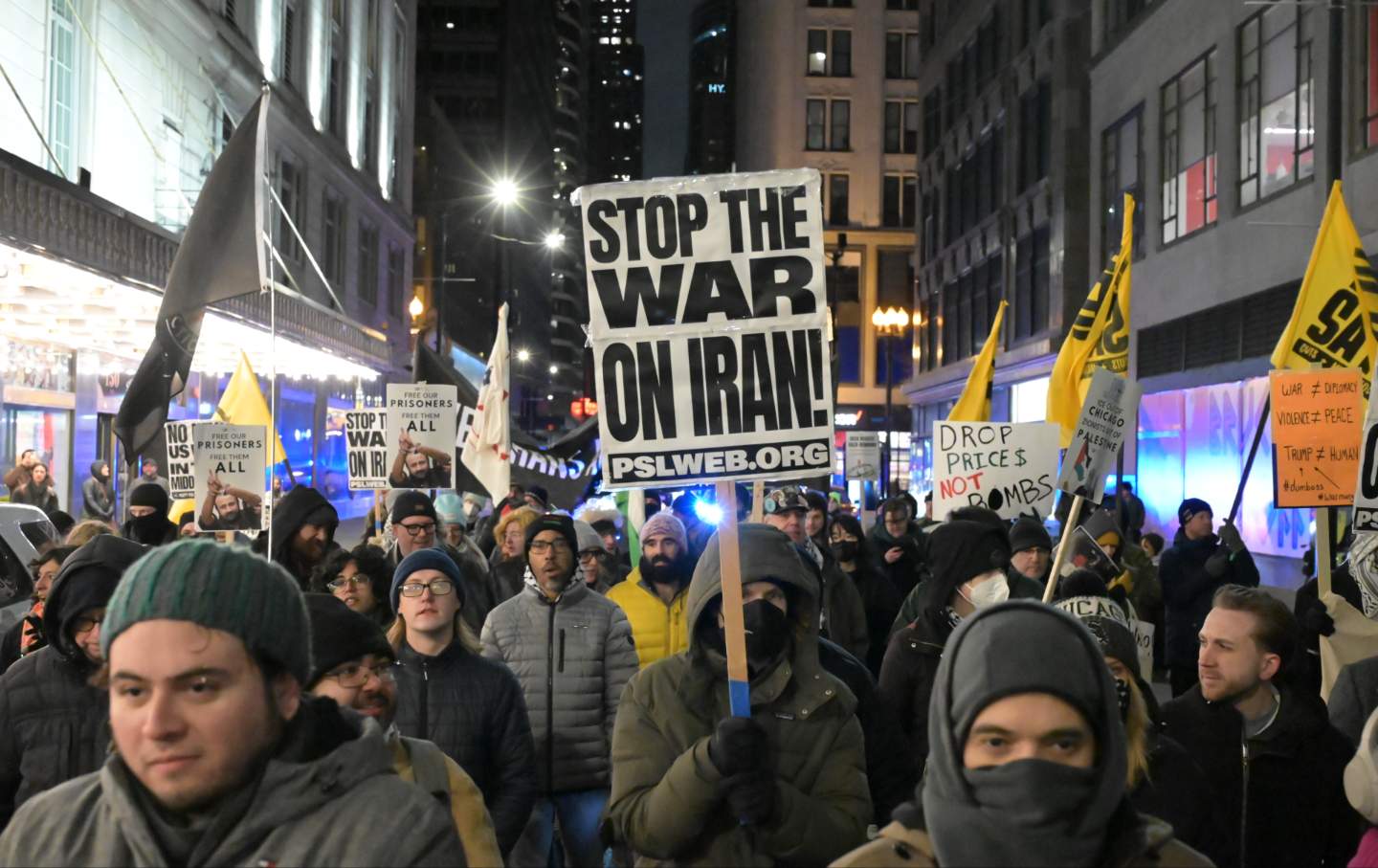
Congress has a duty to take up War Powers resolutions and assert its primacy over matters of war and peace.

The Epstein files have renewed scrutiny of alleged misconduct by powerful figures, including Donald Trump and Prince Andrew, raising ongoing questions about accountability and just…
As a candidate, Zohran Mamdani made promises to New York City’s trans community. With two hospital systems ending trans youth care, he’s now facing his first test.

